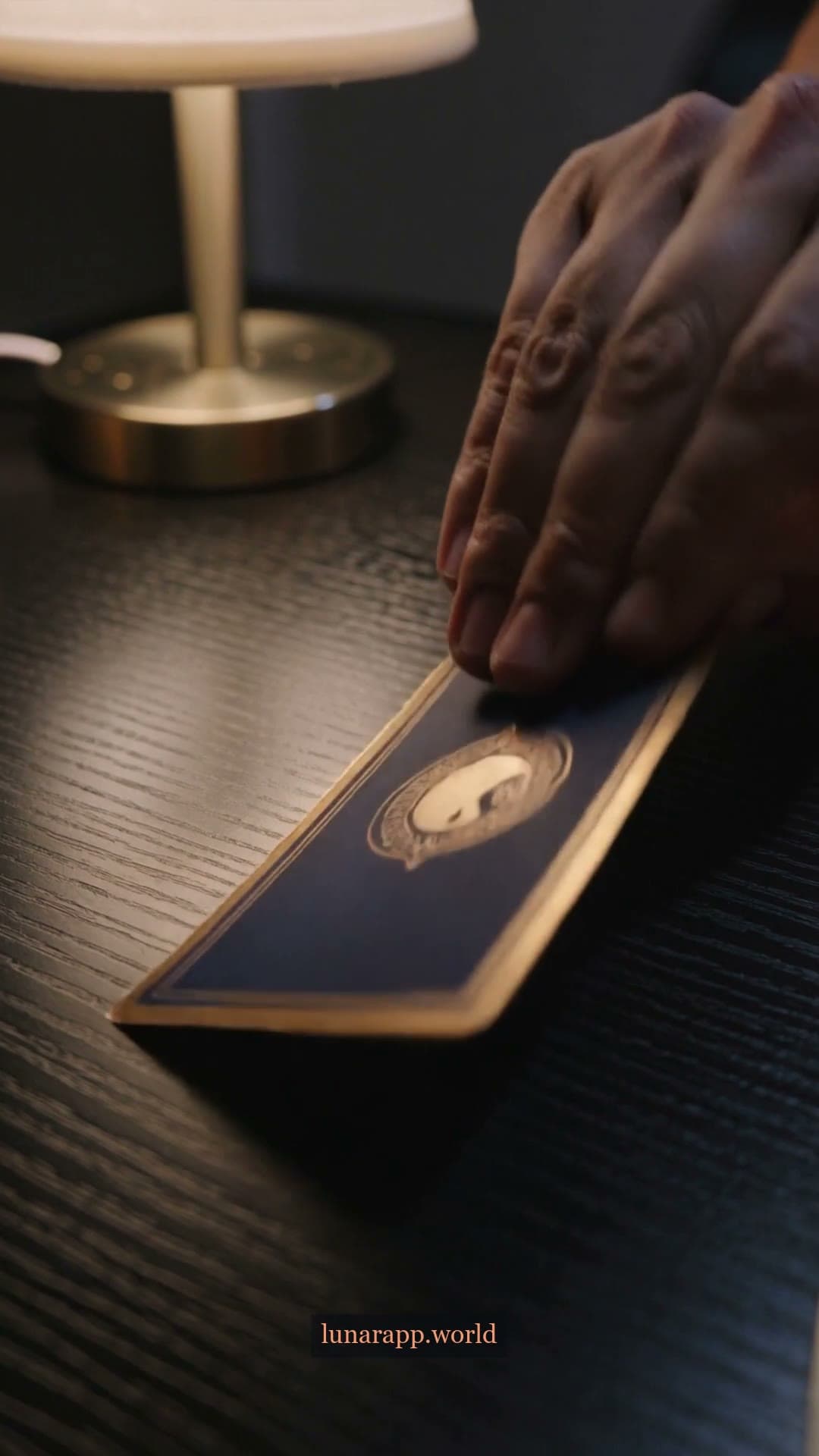
Tap a button, get a card. That is how most tarot apps work, and it is also why the reading feels like a fortune cookie: something happened to you, and you had no hand in it. Lunara does it differently. The deck is shuffled on your device, fanned out in front of you, and you pick the three cards. Then you flip them.
This is not a gimmick. It changes what a reading is for.
A reading is a mirror, not a message
A card cannot know your week. What it can do is give your attention a shape. "The Tower, reversed" does not mean disaster is cancelled — it means you now have a symbol to hold your situation against, and your mind will immediately start noticing what fits and what does not. That noticing is the whole value.
When you choose the card yourself, two things happen. First, you slow down — the small ritual of hovering, deciding, committing puts you in a reflective state before you read a word. Second, the reading becomes yours to argue with. You picked it; you can also disagree with it. That is a healthier relationship with any symbolic system than being told.
How Lunara's shuffle works (the honest part)
- A real 78-card deck, every card drawn for Lunara — no stock art. You can browse all of them at lunarapp.world/tarot.
- Shuffled on your device with cryptographic randomness (Fisher–Yates over
crypto.getRandomValues). We do not pick your cards on a server. - Roughly three in ten come reversed, the way a physical deck behaves.
- You pick three from the fan. Tap "Shuffle" again if you want; the deck reshuffles with a short animation and you choose again.
The three spreads
Past · Present · Path — Where is this coming from, and where is it going? The classic. Card one is the weather behind you, card two the room you are standing in, card three the direction the door opens toward.
Situation · Obstacle · Advice — What am I actually dealing with, and what helps? The most practical spread for a decision. Card three is read as a move, not a prophecy.
You · Them · Between you — What is really happening between us? For a relationship, a partnership, a difficult conversation. Two cards for two people; the third for the thing between them.
You can add a short question (a sentence is enough). The reading uses it as a lens.
Reading the cards against your chart
Here is where astrology and tarot help each other. Lunara knows your birth chart and today's transits, so each position is read with that context: a Moon–Saturn day and the Nine of Swords land differently than the same card on a Venus–Jupiter day. The reading has five parts — a headline, one paragraph per position, the thread that ties the three together, the point where it meets your chart, and one move you can finish today.
The move matters most. A spread that ends with "be open to change" has done nothing. A spread that ends with "send the message you drafted yesterday, before noon" has given you something to test — and tonight's Echo will ask how it went.
Card of the day
If three cards is more than you want, there is also one card a day: same card all day, read against your own sky, a new one tomorrow. Turn it in a quiet moment. Lunara+ keeps your card history so patterns across days become visible.
Try the spread free at lunarapp.world. Free members get one AI-written spread a day; the card draw itself is always free.